Are houses in New Zealand made of paper?

Before moving to Christchurch, I once lived in Blenheim with my friend J. It’s a small town about six hours north of Christchurch. We spent a winter there, working the most mind-numbingly boring job in the world—opening mussels.

The house we lived in had been built relatively recently, but it was unbearably cold. Even indoors, a chill lingered in the air, forcing us to bundle up in layers from head to toe. The only heating came from a single fan heater in the living room and a small stove in the kitchen. Every morning, getting out from under the blankets felt like a punishment.

That was when I said it:

“Are houses in New Zealand made of paper or what?!”

Hearing that, you might think New Zealand is a brutally cold country. But in reality, the climate here is quite mild. The temperature doesn’t fluctuate drastically throughout the year, and the seasons shift gently. Even in Christchurch, where I live now, summers and winters aren’t extreme.

Which made it even harder to understand.

Why—why—are New Zealand houses so cold, regardless of the season?

At first, I thought it was just me. Maybe I had gotten used to the heat after spending two years in Australia before coming here.

But then something a coworker said changed my mind.

P, who had immigrated from Calgary, Canada, had settled in New Brighton. Apparently, living by the beach had been a dream of theirs. Of course, that dream quickly shattered once they experienced the biting sea wind—and the cold houses of New Zealand.

“Back where I lived, snow would pile up to your head, but inside the house it was always warm. Here, it’s warmer outside than inside!”

After hearing that, I came to a conclusion.

New Zealand houses are cold.

And naturally, the next question followed:

Why?

Most houses here are built of wood, designed to withstand frequent earthquakes. The problem is, especially in older homes, insulation is often poor. While roof and underfloor insulation are legally required, wall insulation frequently isn’t. Cold air seeps in through those gaps. Many houses still don’t have double glazing, so drafts slip in through the windows. Even with carpet, the damp floors never quite warm up.

Heating isn’t much better.

Trying to heat an entire house with a single heater in the living room is nearly impossible. Even if you manage, the electricity bill will make you regret it. And those heaters dry out the air. Add in dust rising from the carpets, and for someone like me—with chronic rhinitis—it’s a nightmare.

“I miss Korean floor heating so much.”

I grumbled, my feet freezing even inside thermal socks.

“If I ever buy a house—though that’s unlikely—I’m ripping out all the carpets and installing underfloor heating first.”

M scoffed.

“You can do underfloor heating here too.”

“Then why doesn’t anyone?”

“Because the power bill would be insane.”

And then he added:

“So just wear slippers.”

“I hate covering my feet!”

I pouted, for no real reason.

In the end, it all comes down to one thing.

Money.

Money, money, money.

With enough money, you can fix insulation, upgrade heating, and improve your quality of life. But the more you grind your life away to earn that money, the less time you have to actually live it.

There was a time when I worked 45 hours a week, saving as much as I could. I could afford most things I wanted. I could run the heater without worrying about the bill.

But I was always exhausted.

And when I did have free time, I spent it sleeping.

As “my time” disappeared, so did my satisfaction with life.

That’s when I realized:

Whenever you gain something, you inevitably lose something else.

Life in New Zealand flows as it is—whether you have much or little.

So instead of obsessing over discomfort, I’ve chosen to accept it.

Today, I’m sitting in front of my laptop wearing a T-shirt, shorts, a cardigan, and thick sleep socks. They said a storm was coming, and the air is a bit chilly—but it’s manageable with warm socks and a sweater. Rather than complaining about what I don’t have, I choose to make do with what I do.

In a way, I’m slowly reaching a state of having nothing—and needing nothing.

It’s March now. Summer is fading, and autumn is settling in. Winter is coming soon.

By now, I’m used to preparing for it.

I take out the winter blankets, the thick clothes, and the small heater. And, without a doubt, the best source of warmth all year round is M—who seems to radiate heat endlessly.

(Of course, M absolutely hates it when my freezing hands and feet touch him.)

In these paper-thin houses, I’m learning, little by little, how to become stronger.

A life that once began with nothing has, over time, filled up with many things.

Slowly—but surely.

So now I know:

Even the unpredictable cold of this place—

I can endure it, in my own way.

Though, if I’m being honest, my favorite method is still this—

slipping my icy hands and feet against M’s side.

He’ll let out an annoyed scream, of course.

But, well—

I’m sure he’ll forgive me.

Out of love.

Too hard to moving!

I moved recently.

It took a full two weeks to unpack everything and get life back into some kind of rhythm. Of course, it’s not completely over yet. Now that we’re in the new place, there’s an endless list of things that still need fixing.

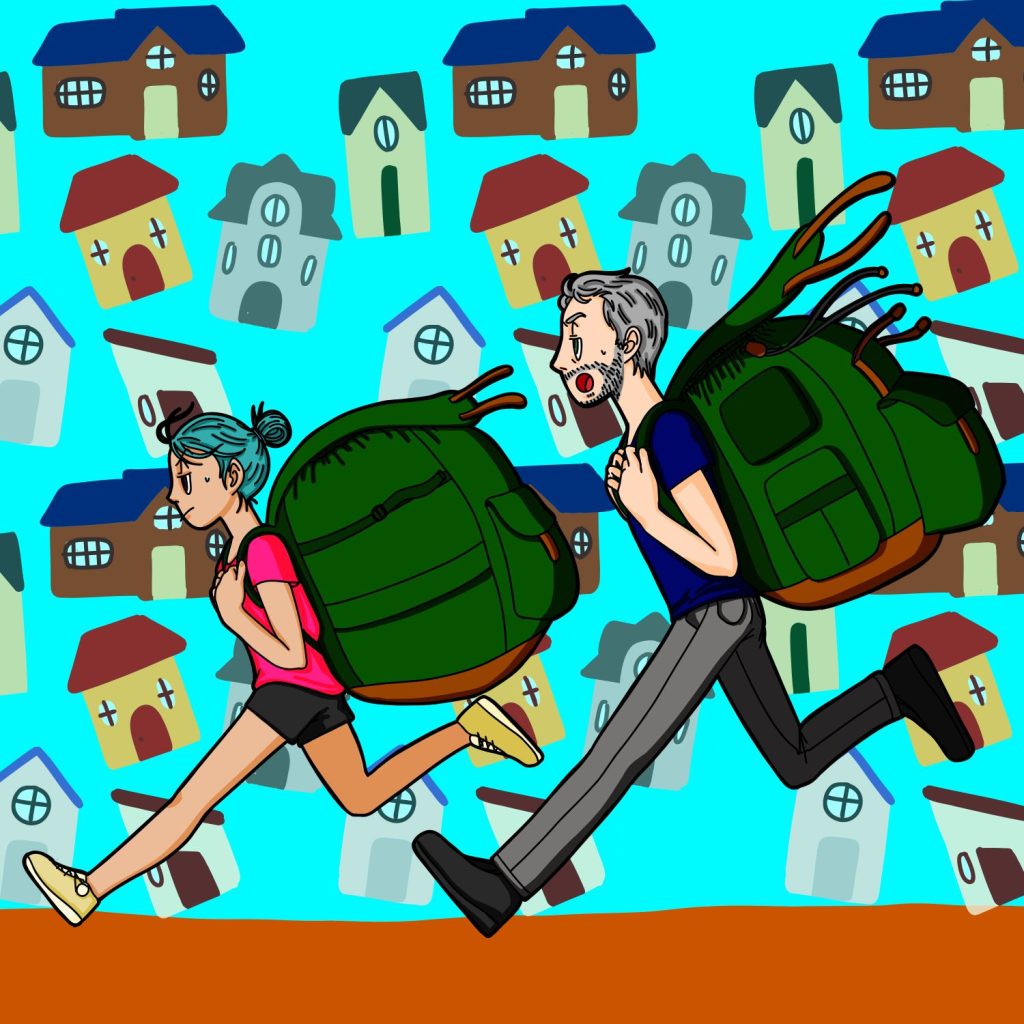
Even so, just knowing I no longer have to worry about having a place to live is a relief. This whole ordeal of “moving” consumed three entire months of M’s and my lives.

This was our second move.

The first happened not long after I moved into M’s place. He had been living there with his niece, H. (H, after COVID, developed a distrust of vaccines and turned anti-government, so she spent most of her time living in a campervan anyway.) A few months into our cohabitation, the landlord notified us that rent would increase by $100 per week and asked us to decide whether we’d stay or leave.

It was a nice house—but not that nice. So we decided, without much hesitation, to move out.

At the time, I was on a work visa, but tenants with only a two-year visa aren’t exactly landlords’ first choice. Naturally, the responsibility of house-hunting fell to M.

What I failed to consider was M’s personality.

Even by Kiwi standards, he is extraordinarily laid-back.

While I grew increasingly anxious as our move-out date crept closer—with still no house secured—M remained completely unfazed. At one point, he casually suggested that if we couldn’t find a place, we could just stay at his sister’s house for a while.

I told him, quite firmly, that I would rather live in a motel than go to his sister’s.

And then, somehow, we stumbled upon a place.

It wasn’t listed through a real estate agency, but directly by the owner. The house sat in the backyard of the landlord’s main home—a shabby little structure that looked like it hadn’t been touched in years. The paint was peeling, the back porch awning had collapsed, and the bathroom… well, let’s just say the bathtub spoke for itself.

And yet, we chose it.

Partly because we were desperate—but mostly because the conditions were too good to ignore.

It was in a wealthy neighborhood, so it felt safe. (The landlord living in the front house was a retired police officer.) It was close to both our workplaces and the city centre. There were lovely parks nearby, and safe cycling paths—which mattered, since neither of us had a driver’s license.

But above all, the rent was ridiculously cheap.

Of course, there was a catch.

The house was scheduled to be demolished in six months.

The landlord made it very clear that he had no intention of fixing anything unless it was a serious issue. But since it was only six months, we didn’t mind. We signed the contract almost immediately.

Except—

That “temporary” six-month stay somehow stretched into three years.

Living in a place that could disappear at any moment made it hard to truly settle in. Everywhere I looked, there were things I wanted to fix—but what was the point? It’s going to be torn down anyway.

We thought about moving many times, but in a city like Christchurch, where prices kept rising, finding something this affordable was nearly impossible.

So time just… slipped by.

Until finally, last December, the landlord decided to go ahead with the demolition.

He told us it would likely begin around March or April and suggested we start looking for a new place.

M was disappointed—mostly because of the rent. I, on the other hand, was thrilled. Finally, we could escape that miserable little den.

M, being himself, said there was no need to rush since March was still far away.

I disagreed.

Having learned from last time, I started moving quickly. (By then, I had residency, so I was no longer at a disadvantage.)

Our requirements were simple—at least, on paper.

Two bedrooms: one for sleeping, one for my workspace. A storage area for M’s collection. A location reasonably close to both our jobs. A safe neighborhood—definitely avoiding areas known for gangs or homelessness. And rent that wasn’t outrageous.

Simple.

Except… not simple at all.

In Korea, finding a place is straightforward. You browse listings online or through an agent, visit, and sign a contract if you like it.

But in New Zealand—at least in Christchurch—it doesn’t work that way.

First, there’s something called a viewing.

You contact the agent or landlord, request a viewing, and they give you a date and time. Private listings can be flexible, but agency listings usually have fixed slots.

You get about 15 minutes to look around, ask questions, and decide if you’re interested. If you are, you request an application form.

The form is long and detailed—personal information, dependents, pets, and a section where you basically have to sell yourself as a tenant.

Then you wait.

Usually 2–3 business days—if they even reply. If you pass, you submit even more documents: financial records, credit checks, references. Finally, if approved, you sign the contract and pay the deposit—typically four weeks’ rent as bond and two weeks in advance.

Only then is it yours.

In other words, getting a rental here isn’t about choosing—it’s about being chosen.

I attended 30 viewings.

Submitted 5 applications.

Rejected 5 times.

Every viewing was crowded—families with kids, groups of professionals, students. On paper, we weren’t bad candidates: both employed, no pets, no kids, stable relationship, good references.

Still, we failed every time—even at the first stage.

It started to wear me down.

“Is it my job?” I asked one day.

By then, January had passed and February had begun. I had recently switched from a high-paying factory job—working 45 hours a week with power tools—to a hotel cleaning job, working 25–30 hours. It was a temporary decision, meant to give me space to figure out my future.

But from a landlord’s perspective, maybe it didn’t look appealing.

M shook his head.

“Not necessarily. Sometimes landlords prefer tenants without jobs.”

“What? Why?”

“Government subsidies. Rent is guaranteed.”

That stunned me.

“So families with kids might actually be preferred too?”

“Could be.”

“That’s… ridiculous. So being hardworking and responsible actually puts us at a disadvantage?”

M just laughed.

“Well, welcome to New Zealand.”

Eventually—just as M said—we got lucky.

We found a private listing, arranged a viewing, made a good impression during the interview, and finally signed the contract.

The new house sat in a quiet neighborhood. It was a 1970s townhouse, with a small front yard and a narrow backyard just big enough to hang laundry. There was an old but usable shed. The kitchen was small but functional. Upstairs had two bedrooms—perfect for us.

The bathroom had been recently renovated. Hot water came instantly. The water pressure was great.

And best of all—

The house was warm.

It had everything I wanted.

Once we paid the deposit, the real moving process began.

And I had no idea it would be even worse than finding the house.

Instead of hiring expensive full-service movers like in Korea, we rented a truck and hired workers. The distance was only 15 minutes—we didn’t want to spend too much.

Then came the packing.

We bought boxes and zip bags from Bunnings and The Warehouse and started sorting everything. I handled household items; M battled his massive collection.

Even after staying up all night before the move, he still wasn’t done packing.

Moving day came.

Two Indian workers arrived early and began loading the truck. M helped them. I went ahead to the new house to wait.

Three hours passed.

Something felt off—but I assumed it was just the amount of stuff.

I was wrong.

They worked painfully slowly. One unloaded, one carried—and M and I ended up doing more than they did.

Worse, when it started to rain, they just left, saying they’d come back in two days—leaving some of my belongings behind.

I was furious.

But complaining wouldn’t change anything. In the end, M had to call a taxi to retrieve my things.

Two days later, they returned and finished the job.

And then came a week of unpacking.

Every evening after work, we opened boxes, cleaned furniture, washed dishes—again and again—until the house finally started to feel like a home.

And just like that, our three-month-long moving saga came to an end.

People often say, “If you have money, Korea is easier to live in.”

I completely agree.

New Zealand can be inconvenient—even with money.

But there’s something you gain from that inconvenience.

I call it the beauty of slowness.

Because everything takes longer, you experience every step more deeply.

Maybe that’s why—

Even though the process was exhausting and mentally draining—

When I look around our home now,

it somehow feels… warmer.

(Maybe it’s just in my head.)

Now all that’s left is to build our life here.

There are many things I want to buy, many things I want to do—but I’ll take it slowly, one step at a time.

Because someday, this house—shaped by our hands—

will feel even more like home.

And maybe, one day,

we’ll even start dreaming of a place that’s truly our own.

D in Wonderland / Introduction

I came to New Zealand in 2019.

At the time, I was on a working holiday in Australia when my closest friend, J, suggested I come over. I applied for a working holiday visa just before turning thirty, and fortunately, it was approved.

That’s how my New Zealand journey began.

But as it overlapped with the COVID quarantine period, what was meant to be a limited stay stretched on, longer and longer, without end.

Somewhere along the way, I parted ways with J and made my way to Christchurch—the largest city on New Zealand’s South Island.

I lived in hostels, drifting from one job to another. At one point, I found myself entangled in a bad relationship after meeting the wrong man, which caused me no small amount of heartache.

Just as I was beginning to consider ending it all and returning to Korea, I happened to find a job—
and that’s where I met M.

Slowly, we became a couple. Then we began living together.

Before I knew it, seven years had passed since I first arrived in New Zealand.

We are still together—
as partners, as housemates, and as best friends.

At the end of the year before last, we visited Korea. The crowded cities and astonishing convenience of everyday life felt both welcoming and strangely unfamiliar at the same time.

And in that moment, I realized—
I had grown quite used to life in New Zealand.

That’s when the thought came to me:
wouldn’t it be interesting to write about the differences between life in New Zealand and Korea, as I’ve experienced them?

“D in Wonderland” began from that simple idea.

That said, I want to make one thing clear—
this is, first and foremost, a personal account.

I don’t live in Auckland, where many Koreans reside, nor in Wellington, the capital. My life is based in Christchurch, a relatively small city on the South Island.

I’ve had little to no interaction with the Korean community here, so my experiences may differ from others’. From time to time, you may also come across the perspective of M, who was born and raised in New Zealand.

With that in mind, I hope you’ll read the following essays lightly and with enjoyment.

And with that—
I bring this introduction to a close.

To everyone reading this,
wherever you may be in the world,
I wish you peace.

—D.