The Terracotta Army Pits / On the Legacy of a Life

A Korean proverb says that a tiger leaves its skin when it dies, whilst a person leaves their name. However, Qin Shi Huang left behind much more than just the title of the first emperor to unify the Chinese mainland. One of these legacies is the Terracotta Army.

Although this was my first time in China, it was not my first time seeing the Terracotta Army. My memories are hazy as I was very young at the time, but I do recall holding my mother’s hand as we went to see a special exhibition. There, I saw the exquisitely crafted and beautiful terracotta warriors. Driven by the memories and emotions of those childhood days, when I was spellbound by the sight of the terracotta soldiers, I have come to the Terracotta Army Pits today.

As if to make up for yesterday’s struggles, I was in luck from the very start of the day. I met a friendly staff member at the telecoms shop and was able to buy a SIM card, and I had no trouble catching the bus from Xi’an Station to the Terracotta Army Pits. My body was still stiff with tension, but I walked with renewed confidence.

The Terracotta Army Pits, home to the giant terracotta soldiers guarding Emperor Qin Shi Huang, were far larger than I had imagined. Centred around a vast museum displaying the excavated terracotta artefacts, there were three pits open to the public. Even these three pits have not yet been fully excavated; it is said that many more remain. Given the scale of the splendour enjoyed by Qin Shi Huang — who bore the title of the first emperor in Chinese history — even in death, I could scarcely imagine the extent of the power he must have wielded in life.
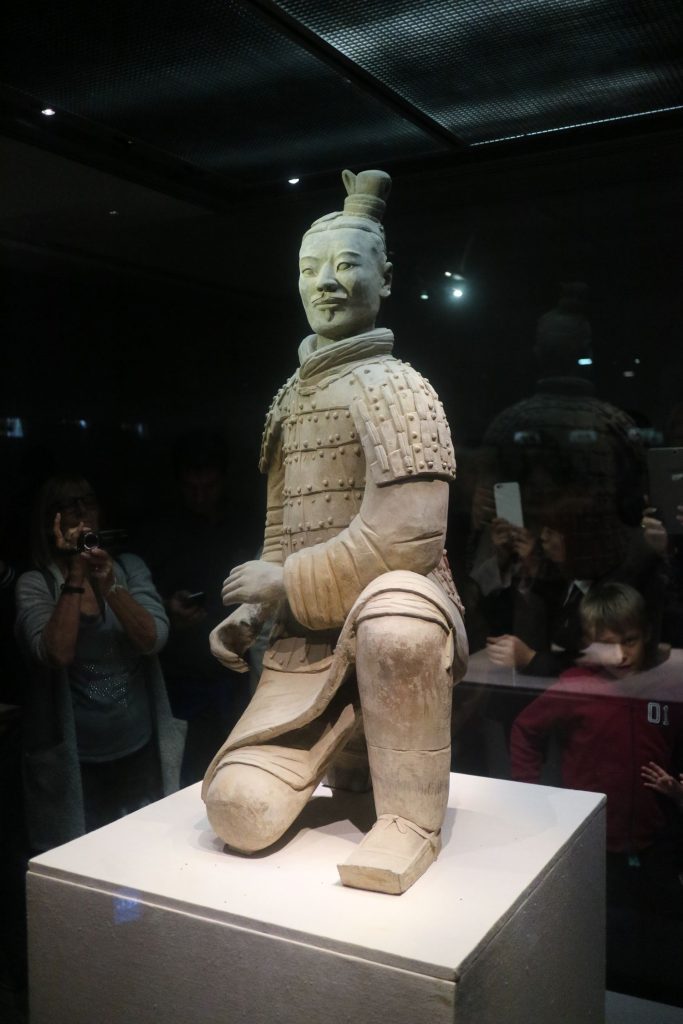
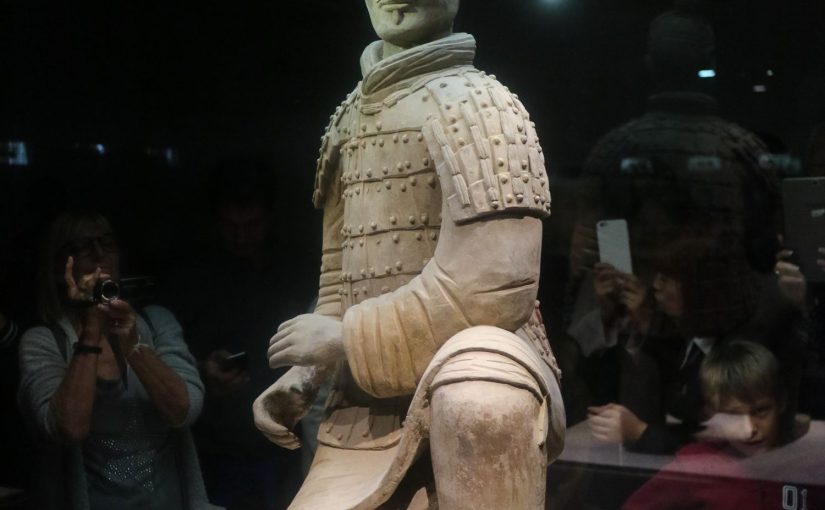
Inside the museum, wandering amongst the terracotta warriors of various shapes, I was completely immersed in nostalgia. For some reason, I felt as though I had been transported back to my childhood, to those days when I used to wander around the museum with my younger siblings. It felt so strange to be there alone, without my family.

And when the actual excavation pit — which I had only ever seen in photographs before — unfolded before my eyes, I paused for a moment to catch my breath. The sight of countless soldiers standing in formation at the bottom of the deep pit was truly spectacular.

‘I must take lots of photos to show them. I’m not sure if they’ll like it, though…’

For my siblings, who were not by my side at that moment, I took photos with great enthusiasm. I felt that the camera lens alone couldn’t capture the emotion I was feeling, so I filmed a video as well. Yet, even as I pressed the shutter, I wasn’t sure I’d ever be able to show these to them.

Since arriving here, I’ve sent my regards to Mum, my friends, and even a junior from university, but I haven’t been able to bring myself to say a word to my younger siblings. When our parents divorced and we went our separate ways, the bond between us was completely severed. Had it not been for Mum, we might not even have managed to see each other and have a meal together before I left the country.

In my memory, the hands of those children I once held in mine seemed like nothing more than a midday mirage.

Before we grew up, we were always together, like the Three Musketeers. I was their leader. The second-oldest would shout, ‘Me too!’ at everything I did, and the youngest would follow me around shouting, ‘Me too, right!’ Yet, as if to mock those days, the older we grew, the further apart we drifted. We would occasionally ask after each other’s lives and laugh together whilst watching TV, but even those superficial exchanges have now vanished.

When did it start? Why did we grow so indifferent to one another? Why was I so uncaring towards them?

How did we, once such close siblings, end up so divided?

Nothing in this world lasts forever. Back when my younger siblings were my closest friends, I believed this bond would remain unchanged even as we grew up. But time does not leave the experiences woven into those years untouched. Just look at Emperor Qin Shi Huang, who dreamed of immortality in his quest for eternal power, yet was ultimately buried beneath the earth alongside his countless terracotta soldiers.

Even whilst standing at the pinnacle of power, where no one dared to look up to him, he had to live in constant fear of assassination, never knowing when he might die. Thus, in his pursuit of the delusional ideal of eternity, the Emperor gradually became a tyrannical ruler who blindly believed in superstition.

Soldiers moulded from clay to guard his afterlife,

The Terracotta Army is, ultimately, a manifestation of Qin Shi Huang’s fear.

For Qin Shi Huang, violence was a means to conquer the continent and seize power. In return, he spent his twilight years steeped in the fear born of an anxious life. Ironically, his mental anguish has been preserved for posterity as this immense cultural legacy.

In our household, Qin Shi Huang was my father. My father, too, used violence as a means to maintain absolute power within the home.

[Know the adults, and know yourself.]

These were the words my father asked me to write when I was in Year 4 of primary school and attending a calligraphy academy. It was then that I realised that this phrase, the meaning of which I did not even understand, was our family motto. My father had it framed and hung it proudly in the centre of the living room. Every time I came home and saw that frame, I felt sick to my stomach.

Literally, it was through my father that we learnt our place. As the absolute ruler of the household, he committed acts of violence under the guise of discipline. It was not merely physical violence. It was accompanied by psychological control, created through his words and the atmosphere he created. And that discipline was generally focused on the sole purpose of pleasing my father.

I was grabbed by the hair and thrown to the floor simply for not putting away the shoe bag that was always left in the hall.

I was starved for a whole day simply because my chopstick technique was deemed odd.

My second sibling was slapped simply for using a foreign-made product.

A loud outburst erupted in the middle of the night simply because he disapproved of the youngest child’s career path.

Furniture was smashed, and objects flew through the air.

My parents fought frequently. Fortunately, my mother was not subjected to physical violence. That said, it was not as though there was no verbal abuse or control. We would only intervene when we sensed my father’s tone becoming slightly more intense. If we made a mistake, the target of his venting would sometimes shift to us. We were generally cautious and remained silent for the most part.

Ironically, my father’s violence failed to dominate us. As we grew up, we simply learned how to deal with him. We stopped crying. And we kept our mouths shut. We expressed fewer emotions and kept more secrets. The more we remained silent, the further apart we drifted from one another.

That is not to say we were entirely indifferent to one another. At the very least, there was an unspoken rule that served as a minimal line of defence for each other. At the same time, we did not intervene unless things were truly at their worst. Since it was the parties involved who would suffer most if we meddled unnecessarily and made matters worse, we gradually became individualists who believed it was best not to cause harm to one another.

‘If there is any legacy to my father’s life, surely it will not be us.’

Qin Shi Huang’s violence left a legacy. What legacy would my father leave behind? They say a parent’s legacy is their children. But could we truly be my father’s legacy? What my father gained through violence was children who built walls around themselves to hide.

‘At least, I certainly won’t be.’

A blemish from the moment I was born, and having severed all ties following our final argument, I could never be my father’s great legacy. It would be a lie to say my father played no part in the reason for this journey, but whatever remains at its end will be entirely my own.

I shall not go down in history like the immortal name of Qin Shi Huang.

But at the very least, it will be my shameful confession passed on to my mother and siblings.

And if the day ever comes when we can tear down the walls we’ve built between us and laugh as we talk about this journey, wouldn’t that alone be grand enough? Dreaming of that day when I can pour my heart out to my siblings over a drink, I walked away from the Terracotta Army Pits.
Muslim Street, Birth of a family

Xi’an, All things start

The loud voices of street vendors rang in my ears.
Before me stretched another world entirely.

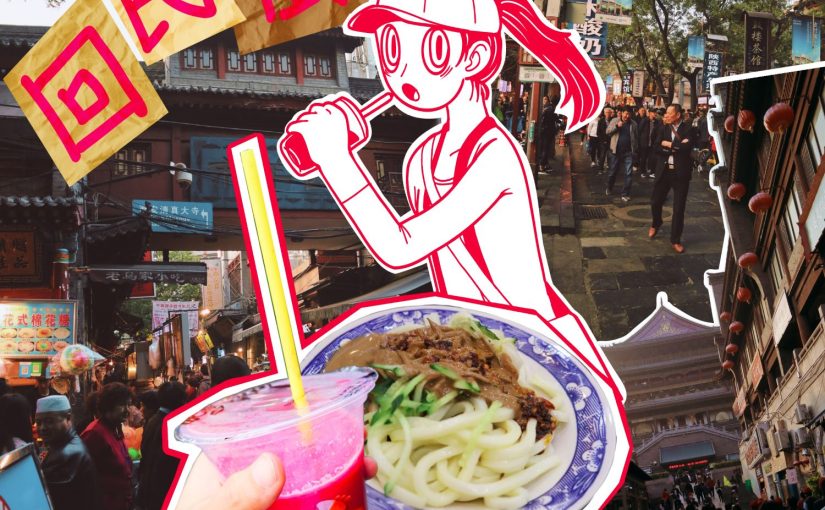
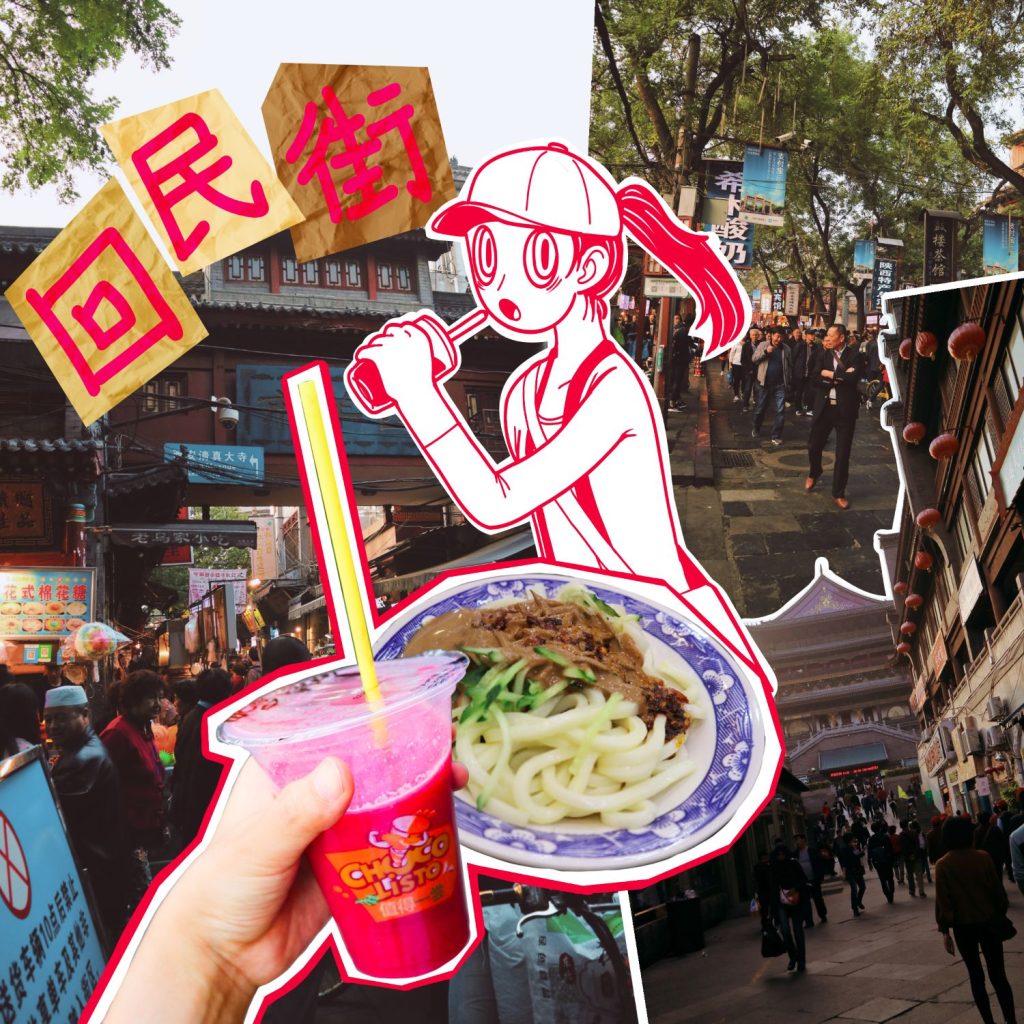
The scent of spices stung my nose. The sweet-tart taste of pomegranate juice—my first—lingered on my tongue. In the Muslim Quarter of Xi’an, I surrendered myself to these unfamiliar sensations.

The gloom from a failure to buy a SIM card had already vanished.

I took photos, but the camera couldn’t truly capture the vibrancy of the street. It is all unfamiliar to me—The noodles mixed by dark soy sauce and peanut paste, lamb skewers with strong spices, flatbread baked in clay ovens, and teppan-style ice cream made from crushed fresh fruit. And also, souvenirs, toys, and strange goods lined the stalls.

In the crowd, many of them were travellers just like me, but some locals were living their daily lives. Walking through the street surrounded by people speaking a language not understandable, makes me feel like I am part of their world.

The Muslim Quarter began as a place where Arab traders, arriving via the Silk Road, settled after marrying Han Chinese women.

What started as the union of two different peoples became a community—
a culture—
that continues to this day.

It was nothing like the ruins my own family had become.

The merging of two cultures created something new—a continuous identity.

But in the case of my family, two people became one, but never truly. My parents’ marriage, only held together loosely by legal ties and children, should have been predicted from first place; it would be doomed somehow.

And at the start of that family—

was me.


One day in December 1988, just before Christmas, a healthy baby girl was born—
weighing 4.5 kilograms.

My parents had married that May. It would have been impossible to deny that my existence played a role in that decision.

And so, I was born—
a girl as healthy as any other boy could have been.

I was so large that my mother couldn’t deliver me naturally; a C-section became inevitable.

Outside the operating room, my father waited.

“Congratulations. It’s a girl.”

He couldn’t hide his disappointment.

Without a word, he left the hospital with my uncle and went to drink. Bitter soju filled his glass.

When my mother finally opened her eyes after the long surgery, the first person she saw was not her husband, nor her child—
but her mother-in-law.

My grandmother was furious. She scolded my mother for not giving birth to a grandson. My mother said nothing in return.

After my grandmother left, my mother lay alone in the hospital room, swallowing both pain and sorrow. A nurse placed the crib beside her bed.

My mother pushed it away with her foot.

She knew it wasn’t my fault—
And yet, she resented me anyway.

“But when I started seeing my own face in yours… I couldn’t hate you anymore.”

That’s how she remembered it.

No matter what had happened between her and my father, she always said she never regretted having me.

To her, my siblings and I were the only jewels she had gained from a barren marriage.

And yet, I often wondered—
If she hadn’t had me, would she have gone through with that marriage at all?

My mother took pride in her work. Since her teens, she had sold hanbok at Gwangjang Market and earned good money. Even now, when she talks about those days, her face still lights up.

If she hadn’t married then—
if she hadn’t had me—

Wouldn’t she have lived a better life?

It was my father’s decision, based on patriarchal beliefs, that kept her at home. She left her job, struggled with housework, which she wasn’t used to. Even she had to take care of my uncle, whom my father had brought without warning.

And then, after all that, she was scolded simply because her first child was a girl.

Even though the doctor had already told them the baby’s sex during pregnancy.

But my father and grandmother clung stubbornly to their expectation of a son. They convinced themselves—because of her diet, the shape of her belly, or just a feeling—that it had to be a boy.

And when that expectation failed, all the disappointment fell on my mother.

A man and a woman met.
They married.
They had a child.

A family was born.


“You came here alone? That’s amazing!”

The hot pot party was simple. Skewered ingredients were dipped into broth and eaten. There were more vegetables than meat, but considering it was free, I had no complaints.

With a beer in hand, I picked at the food and made idle conversation with strangers at the table.

A group of middle-aged women from the Netherlands looked at me with something like admiration. For a moment, they reminded me of my mother.

So I just smiled.

If I opened my mouth, I felt like all the complaints I had been holding back would come spilling out.

After eating enough, I returned to my room. A was still asleep, unmoving.

I washed up lightly and lay down, staring at the unfamiliar ceiling—
Or rather, the underside of the bunk above me.

I recalled what happened today in my mind.

It felt like a short film that was drifting past me as a dream.

I quickly picked up my phone and uploaded the photos to Instagram. Nothing extraordinary, but I wrote about it as though it had been.

Then I messaged my mother—small things about what I had done and eaten.

Her reply came almost instantly.

And for no reason at all, my chest tightened.

After the divorce, my mother’s attempt to stand on her own seemed fragile. I had thought she would recover quickly—she had always been strong, composed.

I was wrong.

And I couldn’t be any real help to her.

We would sometimes sit together over a small table, sharing drinks and conversation—but never the things that truly mattered.

And when I insisted on leaving, she supported my decision.

We both needed time to heal.

[I love you. Sleep well, my daughter.]

Instead of worry, she chose to express love.

I wasn’t used to it. It made the back of my neck feel strangely ticklish. At the same time, tears welled up in my eyes.

I couldn’t clearly remember her face from that morning—
And suddenly, I wanted to go back and see her.

[I love you too. Good night.]

I answered her in the same way.

A daughter who had never been particularly affectionate—sending words she had rarely ever said before. I even added a heart-filled emoji.

When everything was done,

I finally closed my eyes.

It wasn’t a comfortable bed. But exhaustion pulled me under before I could even notice.

My longing for my mother, my stubborn refusal to return, the residue of a past stained with tangled emotions—

all of it washed over me as I drifted into sleep.

And just like that,

The first day of my escape came to an end.

BELL TOWER, Adapting to unfamiliar things

Xi’an, All things start

I’m pretty much fucked.

For a moment, the first line of The Martian came to mind.

“Excuse me, I want to buy a ticket to the city centre. Would you mind explaining how to get here?”

The clerk at the bus counter smiled brightly when I pointed at the address saved on my phone. Then he began to explain, very kindly.

The problem was—I couldn’t understand any single word that he said.

I was not even on Mars!

“Sorry, I can’t understand Chinese.”

At that, a clerk froze mid-sentence. His mouth hung slightly open as he glanced around, then let out an awkward laugh. He turned and called out loudly to his coworkers.

I knew, in theory, that English wasn’t widely spoken in China. But I hadn’t expected to run into trouble at the airport—of all places, at a bus counter.

I should’ve bought a SIM card first…
No—what am I thinking? It’s not likely the telecom staff would speak English either…

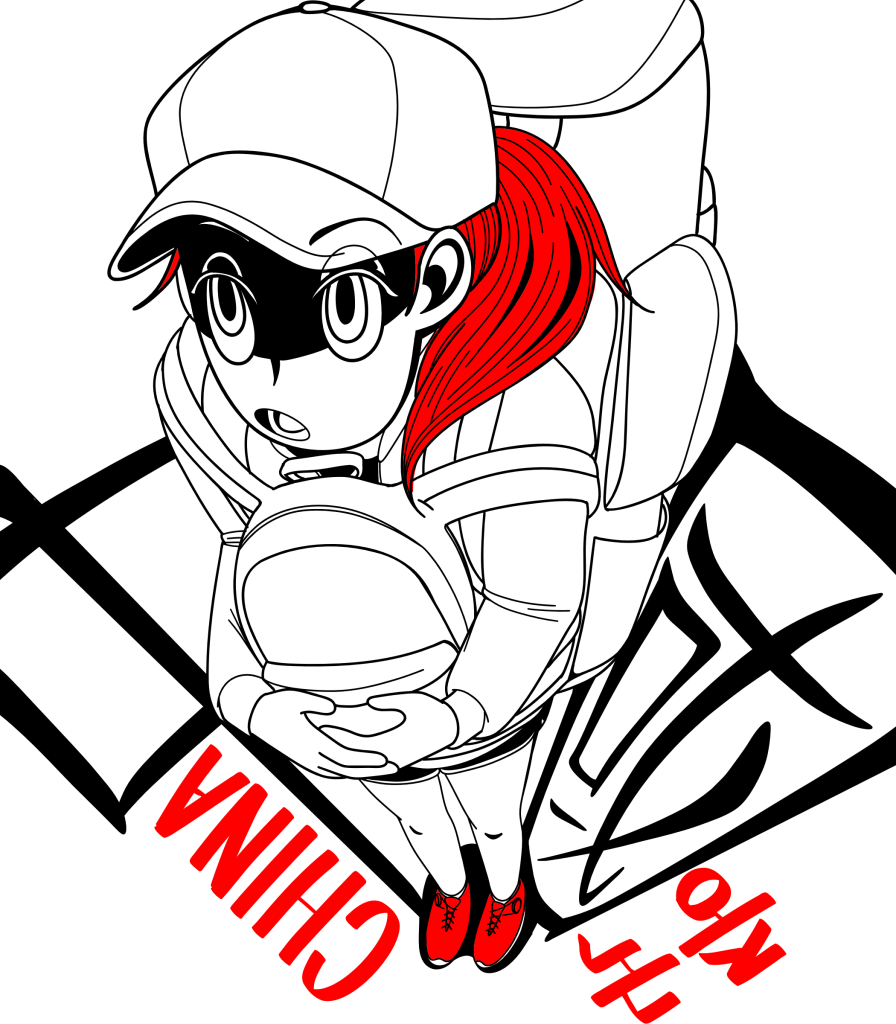
I desperately wanted to use a translation app, but without a SIM card, my phone was useless. The massive backpack strapped to my back—like a turtle shell—pressed heavily on my shoulders. Sweat dripped under my cap.

Still, a clerk has not returned.

As time passed, I started to feel nervous about the long queue behind me.

I sighed annoyingly. I felt pathetic—putting myself in this situation without any prepared plan. I had been far too easygoing, assuming that at an international airport, at least basic English would be work.

“You should learn Chinese. My friend’s son got a good job with it.”

My father’s indifferent words—comparing my life with another random guy—flashed through my mind.

What had I said back then?

Out of sheer contrariness, I had brushed it off, saying I had no interest in Chinese.

If I had known I’d end up in a situation like this, maybe I would’ve just swallowed my pride and listened.

Fortunately, the clerk managed to find someone who spoke a little English. A sharp-tongued staff member explained things clearly—if not warmly.

Finally, I could buy a ticket and board the bus.

The bus was old, filled with the stale smell of cigarettes. But I didn’t care. I sank into the very back seat and wiped the sweat from my forehead with my hand.

The packed bus slowly pulled away from the airport. The highway looked no different within Korea, aside from road signs in Chinese characters.

I stared at that for a while, and then closed my eyes. It had only been a four-hour flight, but I already felt so tired.

Why China, after all of the places in the world?
Out of all the countries I could have chosen, why had I come to one where I couldn’t understand the language and couldn’t even use the internet freely?

As I sank into that spiral of self-reproach, a familiar round face floated into my mind—
annoyingly so.

This is all L’s fault.

I found myself resenting a friend I couldn’t even contact.


“I’m leaving.”

Whenever I had a drink, I would say that.

I’m leaving. I’m getting out of this endless hamster wheel.

Ever since my first backpacking trip to Europe in university, I had dreamed of living abroad. I would tell myself—half promise, half fantasy—that one day I would leave this place and live freely somewhere far away.

And every time, L would scoff.

“Yeah, go ahead. You’ll only understand how hard it is once you try. When I was in China…”

L often talked about her time in China. As someone who had spent two years there as an exchange student, she saw more downsides than upsides to life abroad.

“Don’t even get me started. I barely survived.”

As a calligraphy major, China had been the heart of her studies. And L—stubbornly persistent—endured two years in a city where it was hard to find even another Korean. She didn’t return home once.

When I asked why, she said,

“Because if I came back even once, I knew I wouldn’t want to go again.”

Then she would down a bitter shot of soju.

She struggled at first—couldn’t speak Chinese, took a long time to adjust to the culture.

But even for her, there were good memories.

One of them was the boiled chicken soup at Tiger Leaping Gorge.

“Seriously, it’s incredible. I’ve never had anything like it.”

“Come on. Chicken is chicken. How different can it be?”

“No. It’s on a whole different level.”

When I heard you had to hike all day to eat it, I couldn’t help but wonder—
Was it really that good?

Or was it just the illusion created by exhaustion?

So I decided to find out for myself.

Ironically, by the time I actually came to China, L and I had drifted apart. A small emotional conflict had led us to cut off contact.

And yet, I came anyway.

Because I knew we would meet again someday.

Over the more than ten years we had known each other, we had fought many times. But we always found our way back—
as if nothing had happened.

So this, too, was just a temporary pause.

And when we met again, I planned to tell her—proudly—that I had finally been to China. That I had tasted the very chicken she couldn’t stop talking about.

Maybe that would be enough to stitch us back together.

I came to China to experience it for myself—
the China, L had spoken of.

And China that first touched my skin felt both familiar and strangely foreign.


When I finally caught sight of the massive Bell Tower, the first thing I felt was relief.

Not awe—relief.

It might sound strange, but far more than the grandeur of Xi’an’s most iconic landmark, it overwhelmed me that the fact that my accommodation was still a farther distance.

I got out of the subway walking like a turtle. A 23-kilogram backpack on my back and a 7-kilogram daypack on the front, like a shell, and a side bag filled with essentials, weighed me down further. My shoulders felt like I was carrying all the weight of the world.

All I want is to arrive at the hostel.
To drop everything.

“You can do this. Just a little more to go…”

I muttered to myself like a mad person as I walked.

The five-minute walk past the Bell Tower into a narrow alley felt impossibly long.

And finally—when I opened the door—

“Welcome to Xi’an!”

The simple greeting from the front desk felt overwhelmingly comforting.

For the first time, I smiled.

I dropped my bags and straightened my back. A groan escaped from my mouth.

The hostel was an old but well-maintained building. The lobby had a restaurant and bar, and the dorms were upstairs. After checking my reservation, the staff handed me a key and explained the layout. There was a free hot pot party that evening, he added—I should definitely join.

I followed him upstairs.

The eight-bed dorm was spacious, with bunk beds lined neatly on both sides. I dragged my luggage over and set it down beside my bed.

Just as I was catching my breath, the blanket on the top bunk across from me shifted. A face peeked out.

“Hi, good to see you. I’m A, from Brazil.”

“Hey, I’m D. I’m from Korea.”

A got out herself from bed slightly, brushing her messy black hair by hand. Her sun-tanned face showed a smile.

“Sorry about my manner. I walked too much today. Exhausted.”

“It’s okay. I’m just really happy to be here.”

“I bet you are!”

She pointed at my massive backpack and laughed. I laughed too. Just found someone being able to communicate makes me feel much relieved.

“Honestly, I am so glad to find someone I actually can talk with. I mean, I didn’t expect nobody can speak English here!”

“Yeah… Well, you’ll get used to it.”

“I’m about to stay in China for a month. I’m a little worried.”

“Don’t be. I know communication is hard, but people here are kind. You’ll be fine.”

Hearing that from someone who had already spent five days here eased the weight in my chest.

After our brief conversation, I messaged my mom and a few friends to say I’d arrived safely. It was 4 p.m.

I stood up.

“Are you going out?”

A asked, half-asleep.

“Yeah. I’ll be back before dark. Are you coming to the hot pot party?”

“Hmm… maybe. Maybe not. Right now, I just want to sleep.”

“Alright then, have a rest.”

“Thanks, girl. And good luck!”

A was back into the blanket.

And I stepped outside carefully.

I stood on the street feeling like a stranger. After all the weight on my back was gone, I could finally see something—
the unreadable signs, the unfamiliar surroundings, the strangers passing by.

It would be lying if I said it didn’t scare me.

I still needed to buy a SIM card. But after what happened so far, I hesitated.

A sigh escaped me.

Maybe I should just go back and sleep like A.

I could go back.

My mother had said I could return anytime if I feel too hard.

It would be embarrassing—going back to Korea just hours after arriving—but right now, it wouldn’t matter.

The problem was, if I turned back now, nothing would change.

I would return to the same cycle—
doing a job I had no passion for, drinking to cope with stress, resenting the past, wasting time.

Therefore, I had two choices.

Forward—
or back.

I took a deep breath and stepped forward.

One step.

Then another, exhaling slowly.

You’ll be fine.

I repeated A’s words to myself. Gradually, I felt at ease.

Maybe it was just my imagination—but the air, thick with exhaust and cigarette smoke, began to feel oddly characteristic. The hazy sky didn’t seem any less clear than Seoul’s. The strangers living their quiet lives no longer felt so intimidating.

And so, I walked.

Of course—

that day,

I failed to buy a SIM card.

At the Incheon Airport

Xi’an, All things start

Life had grown dull, so I decided to ruin it beautifully.
(From an Instagram post, October 14, 2017)


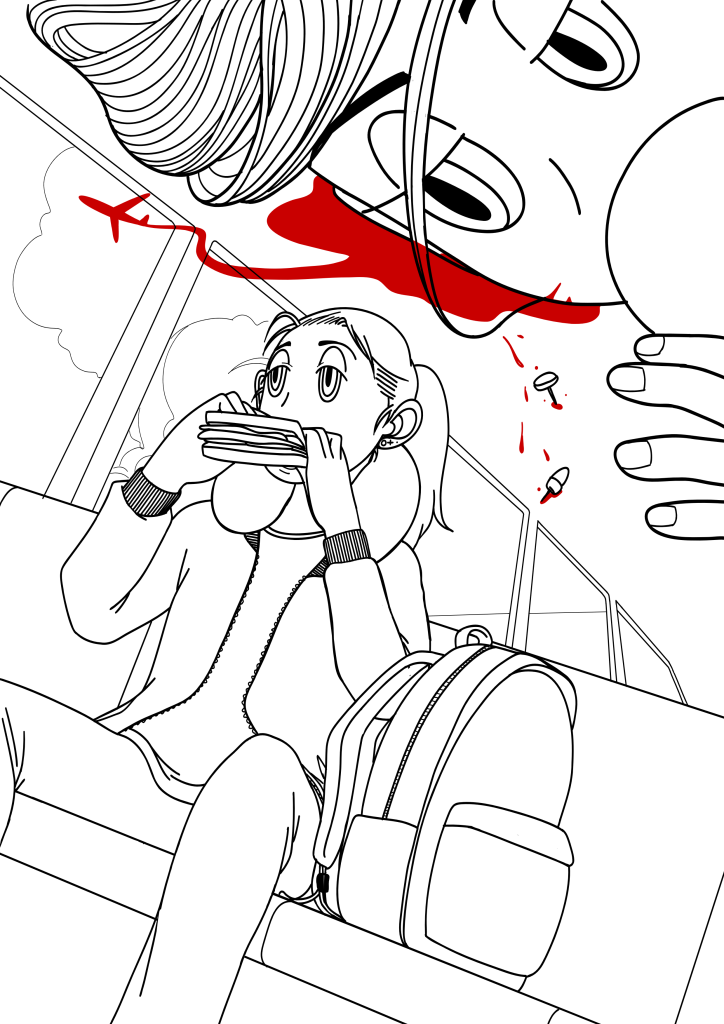
The dry sandwich had no taste. My eyes, still heavy with sleep, ached as I stared blankly out the window. Outside, a plane cut through the air with a low whirr. The sky was blindingly bright blue.

It was perfect weather for leaving.

The Incheon Airport departure area was crowded. People who are waiting for a plane look so different. Some people were focused on their phones or laptops, and others talked with companions. Some held shopping bags stuffed with duty-free purchases, while others spoke on the phone, as if saying their final goodbyes.

Among all those lively, animated faces, feeling like I was the only one wearing an empty face.

I had held a plan to leave Korea for the last three years. It was my life bucket list—I wanted to see the world.

But somewhere between, the meaning of this journey had changed.

My parents divorced. I separated from the siblings I lived with. I left the neighbourhood where I had spent almost my entire life. The work I once loved became nothing more than routine after five years. I had a falling-out with my closest friend and cut off contact. I became sensitive, withdrawn, isolating myself from everyone.

My life had never been entirely stable. Still, I believed it wouldn’t change.

And suddenly, the base of my life collapsed.

I was left over in a place without a roof to shield me from the rain, nor solid ground to stand on. I wanted to scream for help, but my pride wouldn’t allow it. I hid my hurts below a smile and swallowed my pain in silence.

The poison building inside me began to tighten around my throat. I felt like I was suffocating.

So I bought a plane ticket.

It was the first real action I had taken since deciding to travel. And the following year, a journey that once had a purpose turned into an escape plan—a way to avoid reality.

When had that shift begun?

If I hadn’t called the police that day… would things have turned out differently?

Even after a year, the memory remained vivid. Without thinking, I reached up and touched my earring. The small thing in my earlobe suddenly felt bothersome.


I should have taken it off.

When I got slapped on the face and thrown to the ground, the first thing I saw was the small earring, stained with blood. Those things I liked, now because of tainted, I knew I wouldn’t wear them again.

Slowly, I tried to stand myself up from the floor. My head rang. Without even thinking to wipe the blood from my ear, I picked up my phone with trembling hands.

1, 1, 2.

A number I had never dialled before—awkward, unfamiliar, despite how accustomed I was to violence disguised as discipline.

The officer who answered said they would come right away. While I waited, I shut the door and paced the small room anxiously.

Strangely, from outside the door came the sound of the television. As if it were any ordinary weekend evening, my father had begun watching TV.

My father.

A man who had neither loved nor liked me from the moment I was born—who treated me as little more than an accessory of the family.

“I’ll give you when you become a proper human being.”

The words echoed in my ears, sharper than a slap.

That arrogant tone—like a judgment by some honourable god—made my body shake.

What had I done to deserve this?
What was the reason to begin of the fight? Money? Pride?

It started with living expenses. The money I had always sent to my mother suddenly became an issue. Once voices were raised, my father, as always, lost control of his temper. What began as a dispute over money turned into accusations—that I was an incompetent daughter who couldn’t even keep a simple promise.

I snapped back. Said he was no different. Bought up the student loan he had promised to repay after I graduated—
a promise he had never kept.

I had never truly expected him to repay it. I had two younger siblings still in university. So I quietly paid it off myself, with my meagre salary. Not once had I seriously intended to demand that money from him. I had only said it to defend myself against his barrage of criticism.

And then he said it again:

“You should become a proper human being first.”

My blood boiled.

I had never been a proud daughter of his standard. I had graduated from an unremarkable university far from Seoul and worked at an ordinary small company.

But I had lived diligently. Even while repaying the heavy debt on my name, I still gave money to my parents. And whenever my father asked to buy something for his pleasure, I complied without complaint.

And yet, he didn’t even treat me as human.

“I don’t need it. I won’t take your filthy money.”

The words slipped out, driven by wounded pride—
And then he struck me.

There was no time to react.

As soon as I hit the floor, I straightaway came to my senses. In the house, it was just the two of us. There was no one to protect me.

So I picked up my phone.

The police arrived sooner than I expected. But as in most cases with domestic violence, there was little they could do. I barely remember what I said during the brief questioning. My attention was entirely on my father’s voice in the living room.

While I trembled uncontrollably, his voice remained calm. There was no trace of guilt.

After a few questions, the officers asked what I wanted to do.

I said I would go to a friend’s house.

I gathered only the essentials and stepped outside. My father didn’t even glance at me as I left with the police.

I went straight to my friend H’s place. The moment I saw her after getting off the bus, I broke down. She held me without a word while I cried like a child.

Even though it was her newlywed home, she welcomed me without hesitation and gave me a room. That night, with her and her husband, I washed away my pain with a few bottles of soju—and tears.

The next day, I woke up late and found a long message from my father.

[I’m sorry about yesterday. But you should understand me as well.]

I read the first line—then deleted the message.

It was something I had wanted to hear my whole life.

I’m sorry.

And yet, his first apology meant nothing to me.

After that, we had a few more clashes before my parents divorced—but that was the end of it. Once we were family, but after all, we became strangers who no longer had to meet each other.

To me, my father became someone less than a passerby on the street.

And what remained in his place were many layers of wounds.

The unpleasant memories weighed on me, making my eyelids heavy. I just wanted to board the plane and sleep.

Even as I left home that morning—my mother seeing me off, a massive bag on my back—it didn’t feel real. The bus ride, the rushed check-in at the airport—it all felt like a part of a dream.

Even now, sitting in the departure hall, I couldn’t feel reality.

I couldn’t even remember my mom’s face this morning.

And strangely, that didn’t make me sad.

[Asiana Airlines flight OZ347 to Xi’an is now boarding.]

The announcement echoed overhead.

I stood up and joined the line. I handed my ticket to the flight attendant and stepped onto the plane.

Only after taking my seat did it begin to feel some realism—that I was leaving.

But I didn’t feel excited.

If anything, I felt calmer than usual.

And so began the greatest escape of my life.

The plane lifted into the sky. The impossibly clear blue wrapped around me. It felt as though it were welcoming me—
Or perhaps gently telling me, you’ve done well.

It really was perfect weather for leaving.

SUM: Prologue

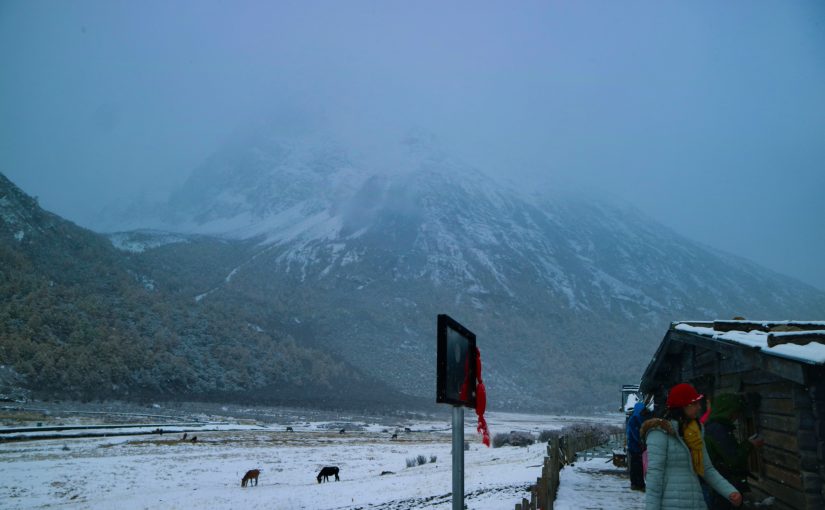
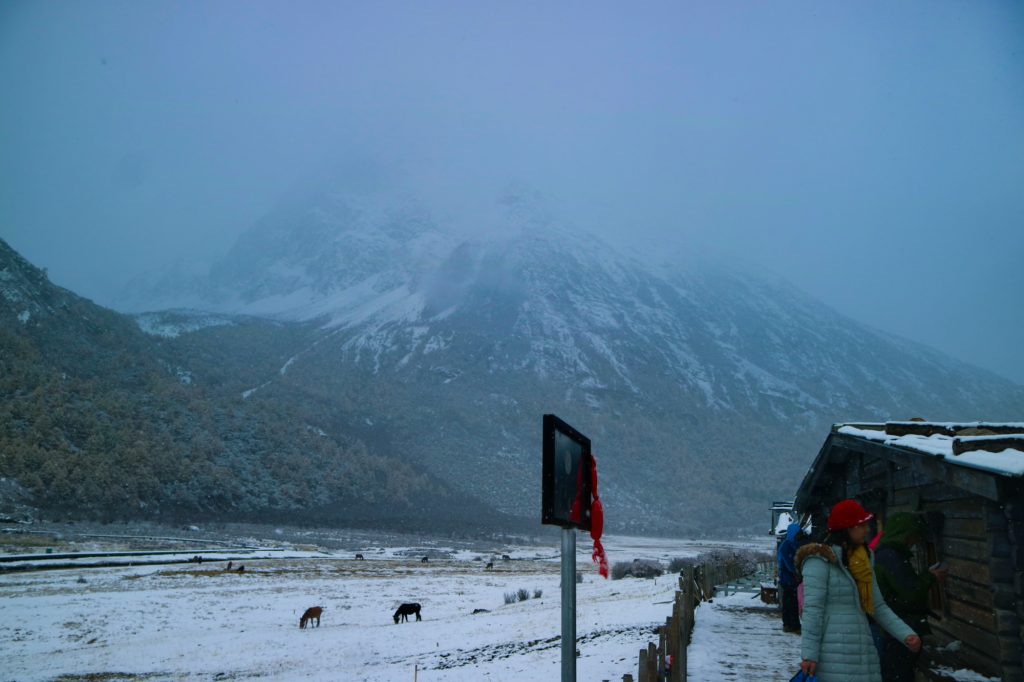
I’m going to climb that mountain. I will see the lake at its summit.

That was the resolve I set out with.

From the very beginning, sleet began to fall. Before long, it turned into a raging snowstorm. Everything before my eyes became a white hell. Meltwater streamed beneath my feet. The wind lashed against me on a path strewn with slippery rocks, urging me to stop. Below the narrow trail yawned a sheer drop. My soaked legs trembled uncontrollably. My nose had gone numb. I could no longer even feel the cold.

One wrong step, and I would slip, falling straight into death. No one would find my body. The few people on this path were strangers who spoke a language I couldn’t even understand. I was an outsider. Completely alone.

If I disappeared like this, what would my mother—waiting endlessly for news of me back in Korea—do? Would she search these treacherous mountains for my body? What about my siblings? Those kind-hearted ones… perhaps they wouldn’t even blame me for breaking her heart.

And my father?

Would he even know I am here?

Maybe I should turn back.

The thought crossed my mind.

Running away to survive, only to risk my life climbing a mountain—for what? Just to see a lake?

Yet every time, a voice rang sharply in my ears:

“You’re always like that. You have never done anything you said.”

Even now, I can still see it clearly—the hand raised in those memories. That rough hand struck me harder than the biting wind ever could.

I thought I had escaped. But I was still bound. All my life, I had lived not by my own will, but by his. In my teens, I obeyed. In my twenties, I rebelled. Therefore, I couldn’t recognise myself anymore. Like the blurred landscape before me, I, too, had become indistinct.

So I couldn’t tell—was this stubborn determination to climb a four-thousand-meter peak alone truly my own will? Or was it just a foolish attempt to defy that lingering voice?

And yet, I kept walking.

The reason was simple: a foolish belief. That if I reached the summit, I would overcome all the wounds of my past and finally move forward, unburdened.

So I’ll climb this mountain. I’ll see that magnificent lake.
And then I’ll go back down, lighthearted, and call my mother—tell her I conquered this great peak.
I’ll write this story into a book, like the travelogues of famous writers.
I’ll leave my name behind as someone who rose again after hitting rock bottom.

But unlike my grand ambitions, my steps were timid.

I already knew the truth. Climbing a single mountain would not make me a great writer. Others may have found themselves at the end of such hardship, but I, standing here, was still nothing. Just an unknown Korean who had run away from home in the final stretch of my twenties, before turning thirty.

In the end, my resolve was easily broken by the storm. The trees grew shorter, then disappeared entirely. Near the summit, not even a blade of grass remained. With nothing left to hold on to, I could go no further. I crouched low and clutched a small rock beside me. My fingertips throbbed. My breath came in ragged gasps. I couldn’t tell if it was from fear or the cold.

As my whole body shook, tears welled up, and I questioned myself. Why did nothing in my life ever come easily?

Through the snow, I could see others near the summit—walking hand in hand, leaning on each other. The sight filled me with a deep, aching loneliness.

If only someone had reached out a hand to me.

But I was alone. And not ruthless enough to claw my way to the top at any cost.

So, I gave up. As always. I turned back just before reaching the goal.

It couldn’t be helped, I told myself.

But it stung. Because it felt like that voice had been right all along.

Why did I even come all this way? What for?

The mountain gave me no time to be sentimental. The descent was even more dangerous. I made my way down the slippery slope, half-crawling, terrified of falling into the endless valley below.

My ragged breathing echoed in my ears.

And then—my foot slipped.

My heart dropped.

There wasn’t even time to shout. My vision narrowed. My body tilted. Time seemed to stretch like a slow-motion through my eyes. In my mind, I was already falling.

Then—

thud.

My body stopped.

A strong hand had grabbed the back of my neck.

I heard words behind me—Chinese, which I couldn’t understand. A middle-aged man held me firmly until I regained my footing. Even after, he didn’t let go. I kept murmuring “thank you” as I leaned on him and moved forward. Ahead of us, a middle-aged woman glanced back repeatedly, offering her hand to help me down.

These strangers stayed with me until I reached safer ground. Then, as if nothing had happened, they passed me with light steps, waving casually.

I bowed again and again, calling out,

“Thank you, xiexie, bye-bye!”

I had never known that the touch of a stranger could be such a source of strength. The air was freezing, yet my heart grew warm. Their smiles spread through me like heat, and blood began to flow again through my cold body.

Only then did I realise:

I had never truly been alone.

I had left Korea by myself, but from that moment until now, I had met countless people—people who helped me along the way. My life had always been like that. Whenever I struggled, there had been those who offered me shelter and comfort.

And yet, I had always believed I was alone.

After all, I’m still such a fool.

I had spent my life chasing to be accepted by someone. It’s never enough; therefore, always ashamed of myself. And when I finally realised I could never satisfy that expectation, I lost my way entirely.

Only after everything had fallen apart did I understand—
I had lost something essential to my life.

And now, through a single act of kindness from a stranger, I understood once more.

I don’t have to reach the summit.
I don’t have to be perfect.
I don’t have to achieve something grand.

I am alone—
But I am not alone.

As the tension left me, the rest of the descent became easier. The snow still fell relentlessly, yet somehow, the path ahead no longer felt obscured. I stopped, letting the snow fall over me, and took a long, deep breath.

Instead of looking at my feet, I lifted my gaze toward the distance.

I wanted to breathe.

So, I ran away.

I wish I could say it was for some grand reason—to see the world. But the truth is, my journey began as an escape. After twenty-eight years, the base of my life collapsed. Cornered, I didn’t have the strength to face it—I just fled.

Because if I didn’t, I felt like I might give up on life altogether.
I wanted to live.

That’s why I came all this way.

But no matter how far I went, I couldn’t get away from my issues. Each time the shadows of my past caught up with me, it felt like my throat was tightening again. Even as I ran farther, those chains followed—like ghosts hiding in my shadow.

Let me find a place to reset.
Just for a while—forget everything, gather strength… then I’ll face it.

Wandering with that thought, I ended up here—on this snowy mountain in a foreign land called China. And after being rescued from the edge of death by complete strangers, I finally came to my senses.

So for now, I chose to go down. Slowly. Carefully. Safely.

At the place where I had begun, I turned back one last time. The snow-covered mountain. The summit I never reached. Now hidden behind clouds, no longer visible.

I turned away without regret.

Snow swirling around me, my body shivering in wet clothes—yet strangely, my chest felt warm.

And only then,

I was finally able to breathe.

SUM: Introduction

New Year’s resolutions tend to fizzle out, and the regret—“I should have done it back then”—returns again and again as time slips by.

Last year, I resolved to create work for myself, rather than for others. I tried all sorts of things to discover what I love and what I’m good at. I spent the year failing, getting discouraged, and picking myself up again.

And after a year like that, a question suddenly comes to me:
Is this really the right path for me?

If I had just settled into a job and kept going, at least I wouldn’t be struggling with a dwindling bank account. As I grow older, what if I remain stuck in this in-between state? If I fail again, how will I accept myself as someone who never quite manages to get anything right?

As these thoughts begin to crowd my mind, I find myself thinking of who I was ten years ago.

One day in 2017—
I was in my late twenties, with about four million won in my bank account and a plane ticket. Nothing more.

Leaving Korea back then was, in truth, an escape. I ran because I didn’t have the strength to face my problems. I was too overwhelmed to see even what was right in front of me, let alone think about the future.

Looking back now, I realize how trivial my current worries about the future really are. And with that realization comes a quiet sense of shame.

They say life moves in ten-year cycles. If that’s true, I may be standing on the edge of another great turning point. As I approach ten years since 2017—the year that changed my life—I want to reconstruct this story from the memories and fragments I left behind.

I want to revisit the person I was back then—
at my most lost, yet on the verge of my greatest leap.

So that I can gather the strength to move forward again.

Once more, I steady my breath.